

The State of Caring 2024 survey, carried out by Carers UK, found that the number of unpaid carers facing poor mental health is growing. In 2023 the number of carers who said their mental health was bad or very bad was 27%. In 2025 this number rose to 35%, with carers saying their mental health was good or very good shrinking from 24% to 17%. Many stated their mental health has worsened because they cannot get a break from caring.
We know caring can be rewarding. Carers have been open and honest about how much they value the time they get to spend with those they care for. Whether it be parents, spouses, children, other close family members and friends — those precious moments valued for a lifetime. However, we are also aware that carers, although superhuman in what they do are still human, and too often they are burning the candle from both ends. They spend much of their waking moments caring for others while the needs and care of themselves are pushed further down the to-do list, most of the time at no fault of the carer. After all, caring is not the same every day but every day is only 24 hours long.


At Carers Trust Solihull we do all we can to help unpaid carers receive support and respite through our events, workshops and other activities, which you can find on our What’s On calendar. Also, we have recently adopted Bridgit — a digital carers service — enabling carers to receive support 24/7. Additionally, we have produced a vast collection of helpful guides covering a diverse array of topics, to better assist you in your caring role, including wellness guides for your physical and mental health.
Yet, we can all do more, and that is why this years theme for Mental Health Awareness Week is Action.
We will share how you can get involved with taking Action for Mental Health Awareness Week, for others and for yourself.
Increasing understanding about mental health has always been central to Mental Health Awareness Week. But awareness alone is not enough. If knowledge doesn’t drive us to make the positive changes we know will benefit us, it's not serving us well enough. That’s why we've made action the theme for this year's Mental Health Awareness Week.
Mental Health Foundation
Below you will find resources to get involved with Mental Health Awareness Week 2026. Even small actions can help us all to create less hopeless and more powerful.
Small changes & long-term mental health benefits.
Taking action and making new habit-creating actions, not matter how simple, will provide you and your wellbeing with powerful and long-lasting positive effects:
-
Emotional stability Sometimes the smallest of mishaps of the day, can feel as though we have a target on our backs for all the wrong in the world. Your mental health is the shield against the negative strikes of the day.
-
Improved self-esteem Raising our confidence through positive mental health changes is a positive. Self-esteem is born from confidence in ourselves and our abilities. Improving what we are capable comes from positive actions on mental health.
-
Improved personal connections When we are more aware of ourselves and our mental wellbeing, we become more active and aware in the world around us — including the people we have in our lives.
-
Improved emotional stability Improving the foundations of our mental health, give us the strength to be stable when the storms come.
-
Better mental and physical Many methods of improving the health of our minds have direct benefits to our bodies.
Where to start?
Small actions. Set the bar low. Running a marathon is an intense commitment that requires incredible physical and mental strength — but it begins with putting on your shoes.
When depression, anxiety or stress take away our control, we need to regain it in any way we can. SO rather than trying to push our limits, we meet them. For example, is the house a mess? Don’t clean all of it at once. Take 30 seconds and wash up a single cup. Make it your favourite cup (we all have one) to make the impact more positive. When you get another quick chance, wash up a single plate so you have something to eat from when it’s time. Just from this you now have what you need when it’s time for a longer break, to sit down with a cuppa and something to eat.
This is how we approach the situation from now on — with small actionable impacts as simple as washing a cup or putting on your shoes.
If you need a quick way of self-soothing any kind of stress or anxiety, we do have a toolkit that offers quick and effective methods to help ease them. It’s a quick lifeboat when all around you feels like storming waters.
Any time, Anywhere
We offer a digital carer service called Bridgit, which is available 24 hours a day, completely free of charge. It is an advanced AI built for unpaid carers that can help with every aspect of your caring role: finances, wellbeing, health, stress, anxiety, depression, tips, support, guidance, advice, and so much more. You can chat with dedicated coaches who understand your specific life and caring dynamics.
When you feel like your day isn’t yours, Bridgit can help you to narrow and pinpoint protected pockets of time just for you. Below we have a prompt you can ask Bridgit, who will then walk you through creating a customised daily planner, that is flexible and sympathetic to your caring role. With the goal of helping you find those times to clean your favourite cup.
It may seem unreachable to find free time for yourself but we’re not running the marathon just yet. We’re putting on our shoes.
Prompt for Bridgit – Click Here
I am an unpaid carer, and caring takes up a large amount of my time and energy. I would like help improving my mental and physical health by using my limited free time more effectively.
Please help me create a realistic daily planner that shows when I may have time available to focus on myself. I want the planner to support small changes that can become habits over time, rather than large or unrealistic goals.
Please include:
1. A simple way to map my typical caring responsibilities across the day.
2. Space to include paid employment, work shifts, or other regular commitments, if relevant.
3. A way to identify small pockets of free time, such as 5, 10, 15, or 30 minutes.
4. Wellbeing suggestions for different time windows, including rest, movement, meals, hydration, fresh air, hobbies, social contact, and quiet time.
5. Options for days when caring is unpredictable or plans change suddenly.
6. A flexible “minimum version” of the day, so I can still do something for myself even on difficult days.
7. A weekly view so I can notice patterns in my free time.
8. Gentle habit-building ideas that are achievable for someone with caring responsibilities.
9. Prompts to help me reflect on what worked, what felt too much, and what I could try tomorrow.
Please make the planner practical, compassionate, and flexible. I do not want to feel guilty if I cannot follow it perfectly. I want it to help me protect small moments for my own wellbeing while recognising the reality of being an unpaid carer.
Before creating the planner, please ask me questions about my caring routine, sleep, work, energy levels, health needs, and what kinds of wellbeing activities feel realistic for me.
Take Action
Taking care of your mental health can seem like a daunting task, but you would be amazed at the huge improvements you can see, with the smallest of changes. Caring can take up huge portions of your time, so it’s important to take control of your free time, to ensure you are providing the best care possible — and that includes to yourself.
The Mental Health Foundation has provided quick-to-read tip sheets to help you make small changes to improve your mental and physical wellbeing. These are provided below.
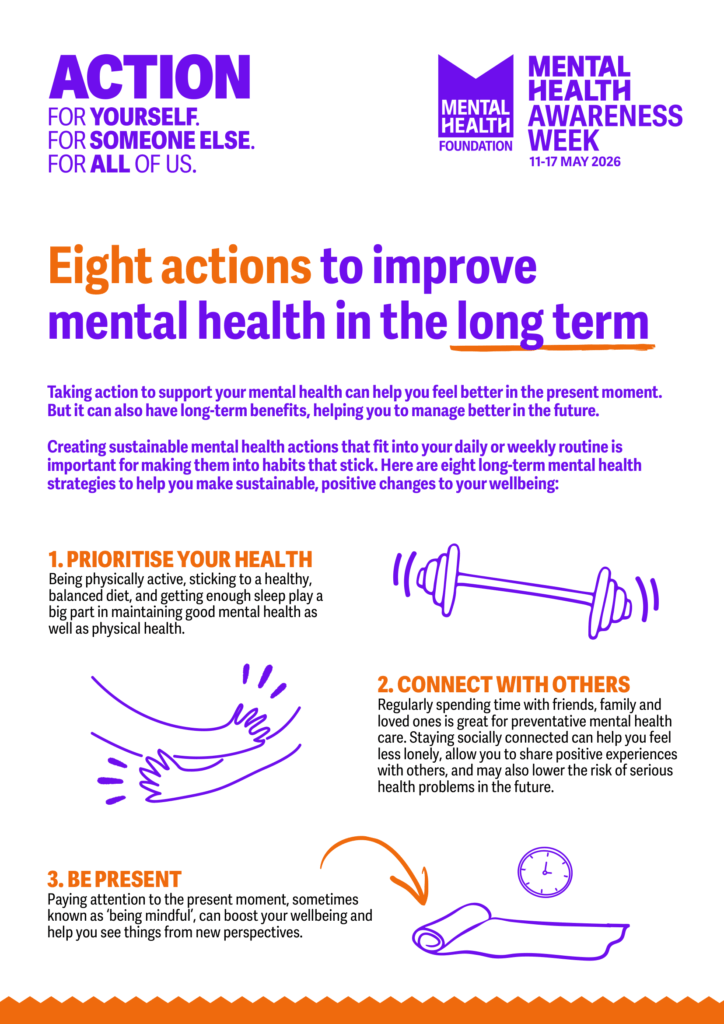
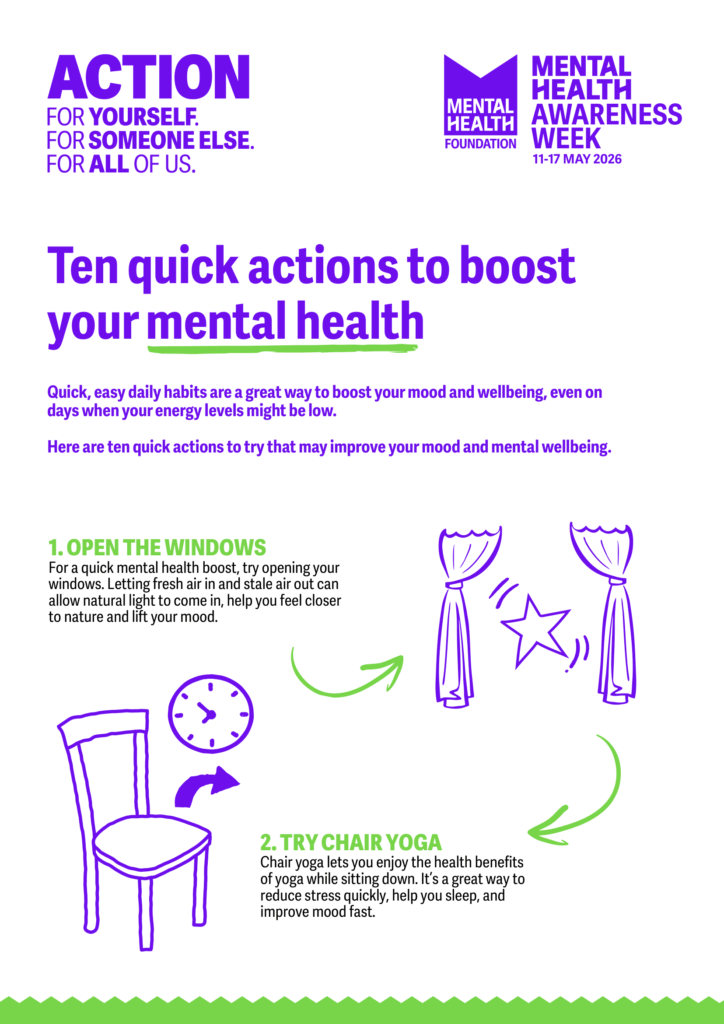
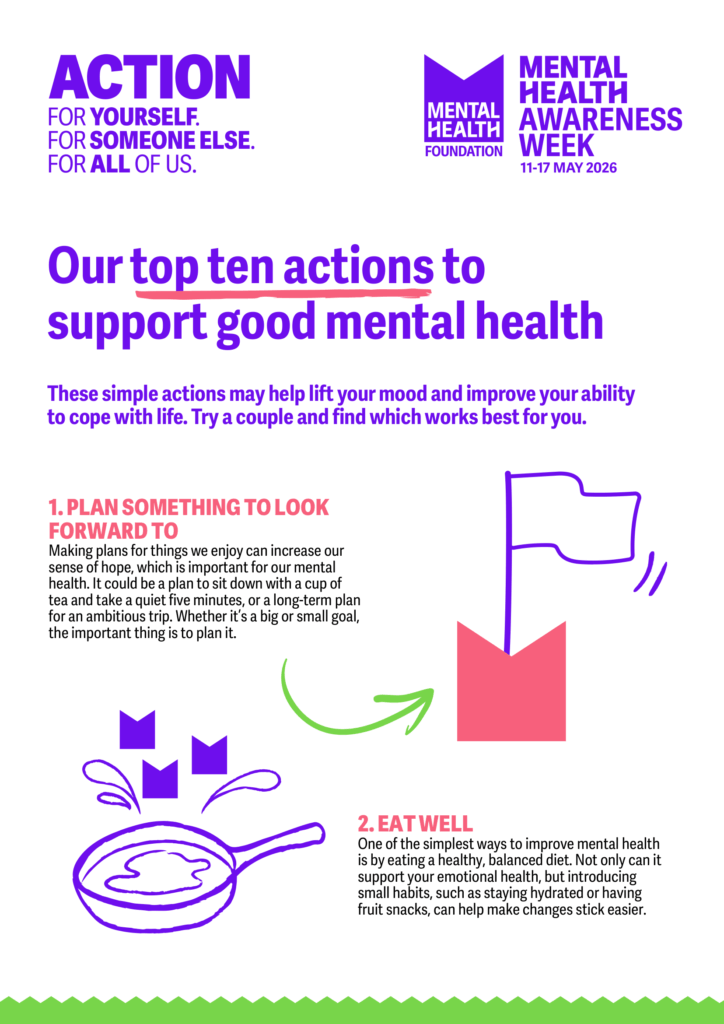
Tips for Taking Action
It may seem impossible at times but small actions today will help tomorrow. Your daily routine is vital to your emotional wellbeing, so start small if you have to. It is easier to stick to a routine when the changes we make are tiny and can fit into our existing lives. Eventually, these tiny changes become habits that we follow without even thinking about them. This creates consistency, which is the biggest hurdle in taking action for your mental health.
Carers Trust Solihull has for more than 20 years, done all we can to assist unpaid carers with their struggles. Over that time we have produced, updated and created content to guide and support you to take action.

Plan something to look forward to
Making plans to do something you enjoy will help your brain to relax and be hopeful for the future. A lot of the time we can dread what the next day brings but when we have something to look forward to, it gives us hope.
It doesn’t have to be anything ambitious — although it could be if you wanted — just booking yourself in some time with a cuppa and reading in bed is more than enough. Maybe you could plan a lunch with a friend. No matter what it is, big or small, make it your own and actually plan for it to happen.
If you need help with things to do, visit our What’s On Calendar for all the events and activities we have planned for you. Just click here to see ‘What’s On’.

Eat (well), Drink (well), be merry!
A healthy diet is one of the simplest but most effective ways we can improve out mental health. Introducing small habits, such as regularly drinking water or replacing sugary snacks with fruit snacks, helps to build habits that ensure those habits will stick.
Healthy eating on a carers schedule may seem like a pipe dream but it is more than doable, and you don’t have to completely remove all those comforting snacks either. We have a guide packed with resources, support, and simple recipes to walk you through it. Ensuring your body and mind is getting the right fuel for the right job is vital. Find that guide by clicking here.
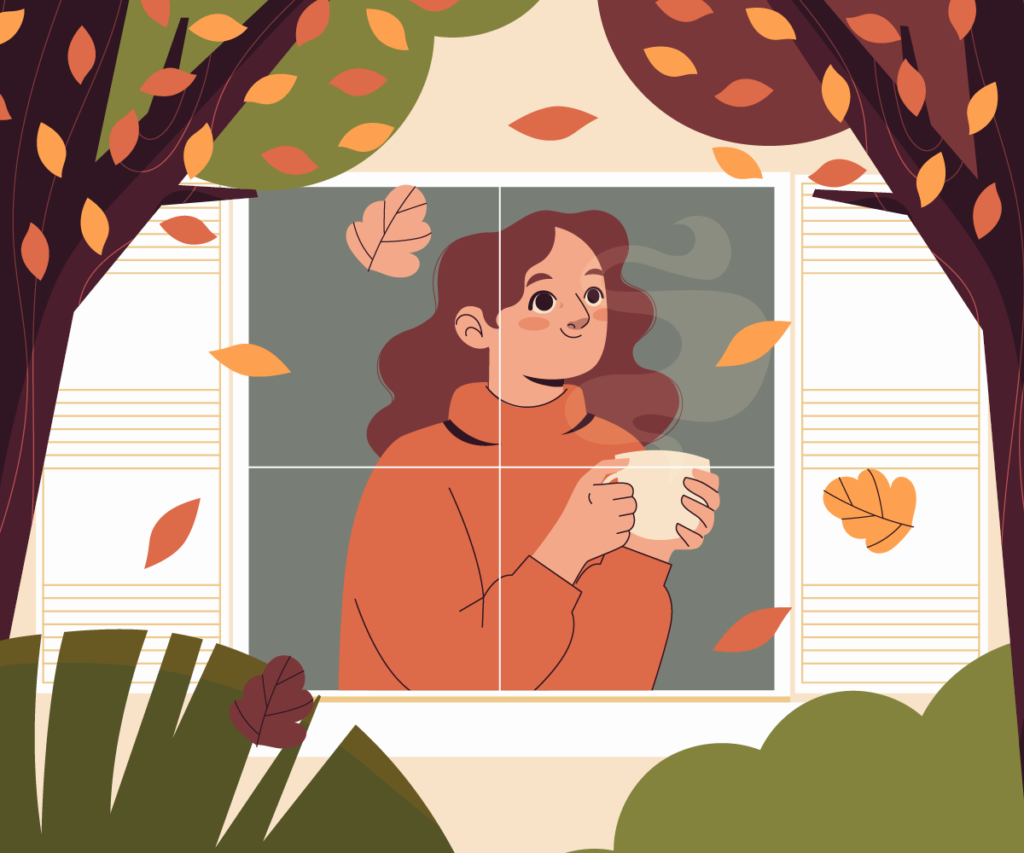
Let nature nurture you
Caring can be all-consuming and it often means staying indoors more than you’d like. But even brief moments of connection with nature can boost your mood, lower stress levels, and help you feel more grounded.
You don’t need to travel to the countryside or go on long walks to feel the benefits, you don’t even need a garden to enjoy some gardening. Whether you have five minutes by a window or twenty on your local street, nature is often closer than we think.
Click here to learn how easy it is to reap the benefits of the “Nature on Your Doorstep”.

Be Creative
Spending time on creative activities is a fantastic way to calm the mind and body. It helps to ease stress, anxiety, and is a great way for you to carve out some time for yourself. So whether its painting, drawing, writing, crochet, pottery or crafts: there are thousands of crafts for you to enjoy, on any budget. For example, do you have access to mud? Well, why not relax with the zen-like experience of making a super smooth and shiny Japanese durodango mud ball?
We can’t forget about music! We’ve wrote previously about the incredible hidden powers music can have on our wellbeing. It can even help those suffering with Alzheimer’s to find moments of lucidity and peace. Listening to music can trigger hormonal changes and the release of dopamine, serotonin and oxytocin – chemicals in the body that can increase feelings of pleasures and motivation, as well as promoting feelings of peace and clarity. So, even if you don’t have the time to sit down and craft something, you can play music while going about your busy day.
Rather play music than listen? No problem! Solihull Music is here to help you. They offer instrument hiring, music lessons, music groups for like-minded people and newcomers alike, to share, learn and embrace the power of music.

Regular movement — help the body, help the mind
The positive effects of regular exercise have been proven to improve sleep, manage stress, reduce cardiovascular disease, and enhance the quality of life.
Moving your body, no matter if it’s yoga, running, weightlifting, cleaning the kitchen or walking up and down stairs, it all counts. Getting your body moving is a guaranteed wire way to fire your endorphins into gear and to pump you with positive feelings.
It’s important to Stay Active as a Carer and you can learn more about how by using our guide by clicking here. In it, you will find quick and easy ways you can stay active, as well as how to get involved with the Solihull On The Move initiative, a “borough-wide commitment, to inspire healthier, happier and more sustainable communities through moving more, more often.”
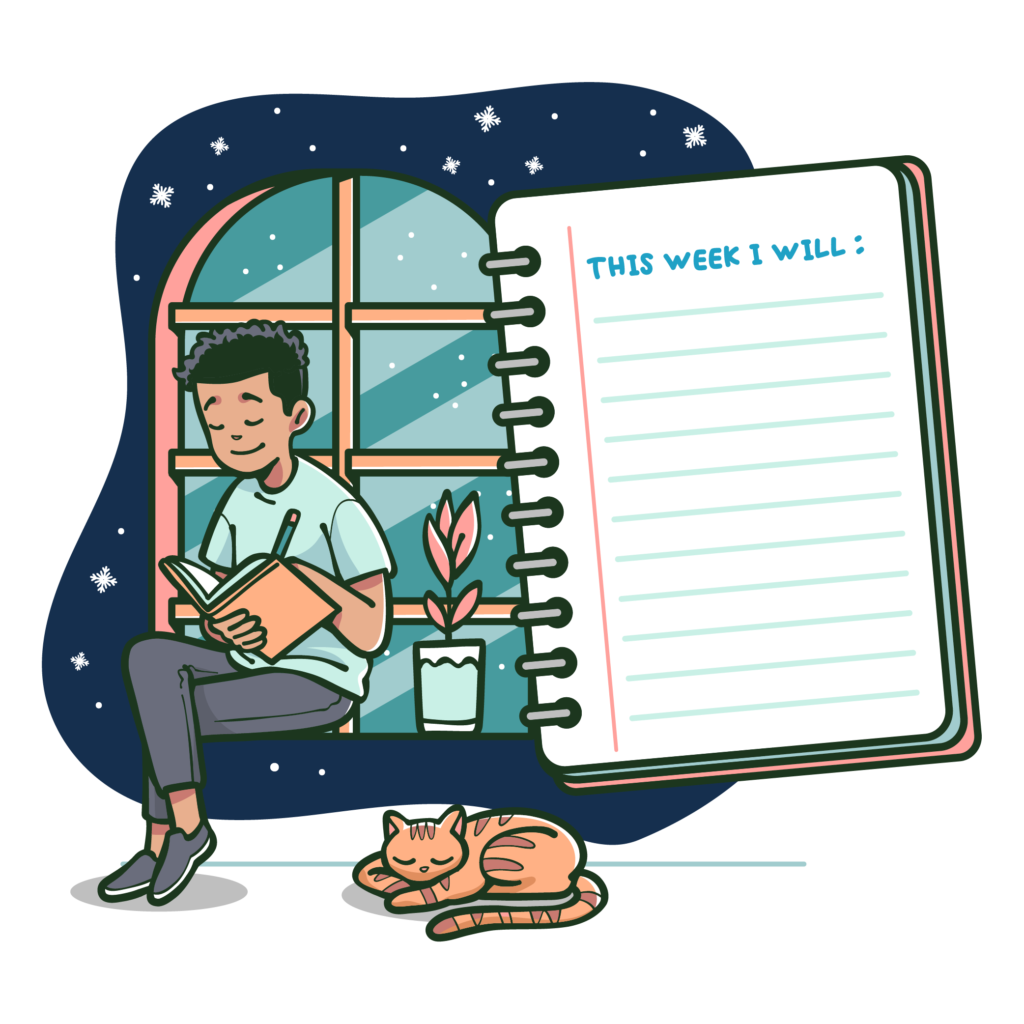
Check-in
Taking a moment to check in with yourself is another great and easy thing you can do; to recentre and find some solid ground. Acknowledge how you feel: the good and bad of the day, what you wish you’d done differently, and what you’re proud of achieving today. It may sound silly but taking the time to find out about yourself and what it is you’re feeling, can have a profound effect on how we process and move forward.
You can create your own check-in diary to update it every day, once a week, whenever works best for you — just make sure you stick to it! Remember, consistency builds habits. Be consistent with positivity and those are the habits you carry with you. If you’d prefer, we do have a simple template for you to follow here, to help get the ball rolling. You can always edit and make it your own later on.
Bridgit, our digital carers service, also has the ability to check-in with you. Answer some simple questions how you’re feeling and it will keep track for you to highlight what it is that makes you feel positive. As well as the negatives that should be avoided. Bridgit is completely free to use, so try it out by clicking here.

Speak out
This can often be the most difficult action to take. It takes a lot of courage to express your mental health struggles, and it demands trust from those you share with. Sit down and explain what it is you’re feeling and what you need to help. It could be with a friend, family member, partner, a phone call or fact-to-face chat mental health service. You can find a mental health support option by clicking here.
You can also access ‘The Waiting Room‘, a directory providing you with links to 100’s of Birmingham and Solihull based services, that can help you take more control of your own health, wellbeing and so much more.
You can also reach out to us. We are available via email or phone call, for you to share your burdens and worries. Get in touch by clicking here.
We would like to remind you again of Bridgit. Many of our carers do not use all the features available, instead they use it as a way to get things off their chest. They talk and express everything that is going on, what they wish would happen, and Bridgit will listen while offering ways to navigate to your wants and goals. Being available 24/7 and completely free makes it worth a try. Try it out by clicking here.
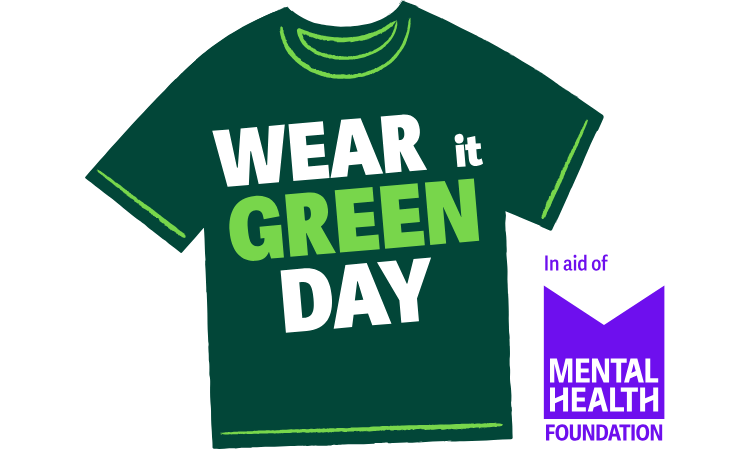
Wear it Green Day
Thursday 14th May, Wear it Green Day, is about raising awareness and funds for vital mental health services. You can come together as a community, workplace or school to promote Mental Health Awareness, and not letting those suffering feel as though they are alone.
No matter the event you’re running, you will find resources packs you can freely download by using the button below.
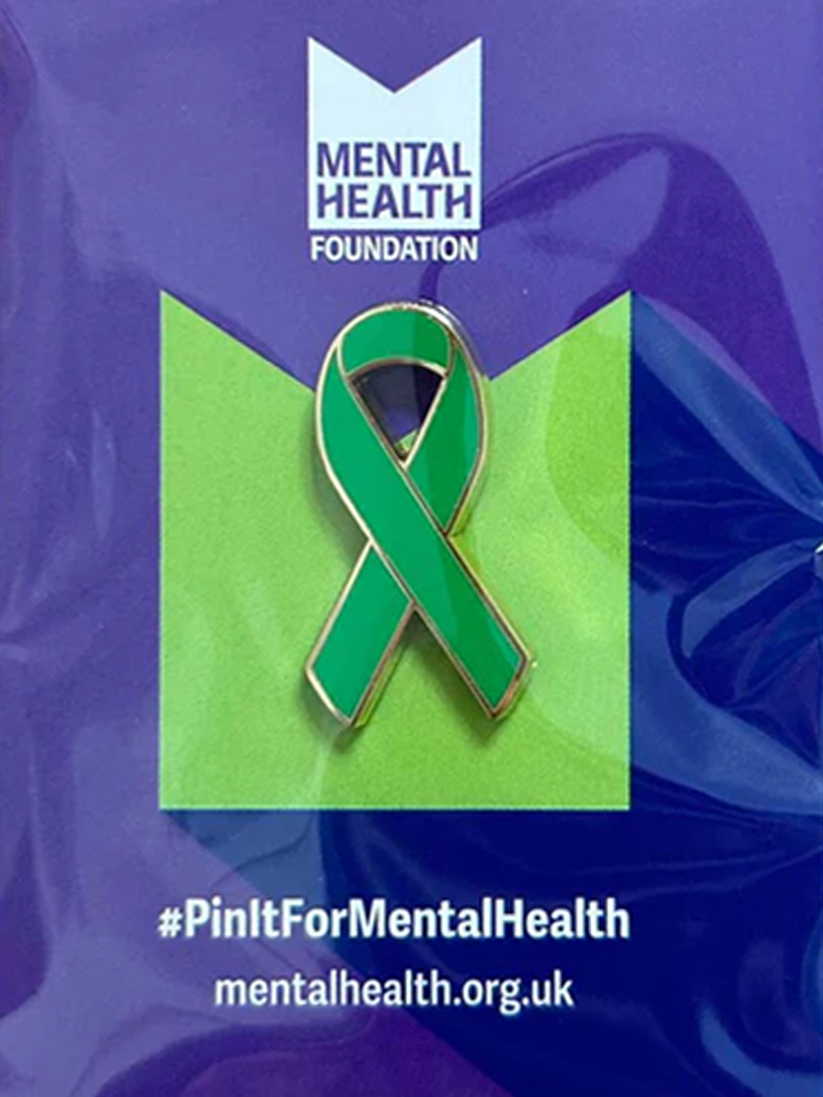
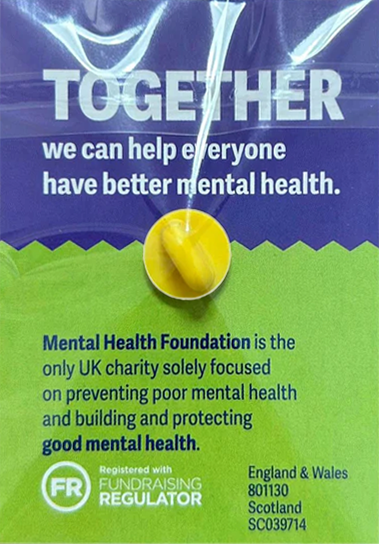
Order Your Green Pin
The green ribbon is the international symbol for mental health awareness.
Wear one to show your friends, family, colleagues — everyone — your support for mental health services.
All proceeds fund the work of the Mental Health Foundation, a UK charity dedicated to mental health.
You can order single pins or boxes of 50.